Dirty Freehub is 501(c)3 non-profit organization.
©2026 Dirty Freehub
A time of extreme heat and beach culture. Instead of a "White Christmas," Australians often celebrate with a "barbie" (BBQ) at the beach.
To live through the Australian year is to learn a different kind of patience. It is to accept that Christmas means sunburn, that Easter can be stormy or flawless, and that a “White Christmas” is a joke about cocaine. It is to understand that the land is never truly dormant, only waiting. The seasons here do not follow the pageant of the north. They follow the ancient, stubborn pulse of the oldest continent on Earth—a place where the sun is always, eventually, the king. the seasons in australia
Because Australia is vast. It is an island-continent where summer’s arrival is not a gentle warming, but a great breath from the desert heart. December, January, and February are not just warm ; they are a sovereign force. The air shimmers over red roads. The cicadas build a pulsing, electric drone that becomes the soundtrack to afternoon siestas. The coast becomes a salvation—the Southern Ocean feels cold even at its peak, a bracing shock against salt-crusted skin. Bushfires stalk the ridges, and the sky turns the colour of bruised apricots. Summer here is survival and celebration, a time of mangoes dripping down chins and Christmas prawns on outdoor tables. A time of extreme heat and beach culture
The truth is, Australia doesn't have four tidy seasons. It has a dozen. The Indigenous Australians knew this—the D’harawal calendar of the Sydney basin speaks of six seasons, from the cool, reliable weather of Wiritjiribin (the echidna breeding time) to the hot, wet storms of Parra’dowee . They read the land by what was flowering, what was spawning, and which way the wind blew. It is to accept that Christmas means sunburn,
Tropical North (Darwin, Cairns, and the Kimberley), the four-season model doesn't really apply. Instead, the year is split into two distinct periods: The Wet Season (Summer/Autumn): High humidity, monsoonal rains, and spectacular thunderstorms. The Dry Season (Winter/Spring): Endless blue skies and warm temperatures, making it the peak time for tourism. The Indigenous Perspective It is important to note that many Aboriginal and Torres Strait Islander groups recognize far more complex seasonal calendars. Depending on the local environment, these systems often identify
A transition period where the intense summer heat begins to fade. Unlike Europe or North America, many Australian native trees are evergreen, so the dramatic "turning of the leaves" is less common.
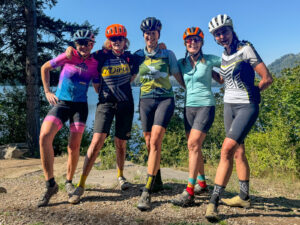 Behind every route is scouting, mapping, storytelling, and a whole lot of pedal power.
Dirty Freehub is a nonprofit, and your donation keeps the magic rolling.
Show your love. Support the stoke.
