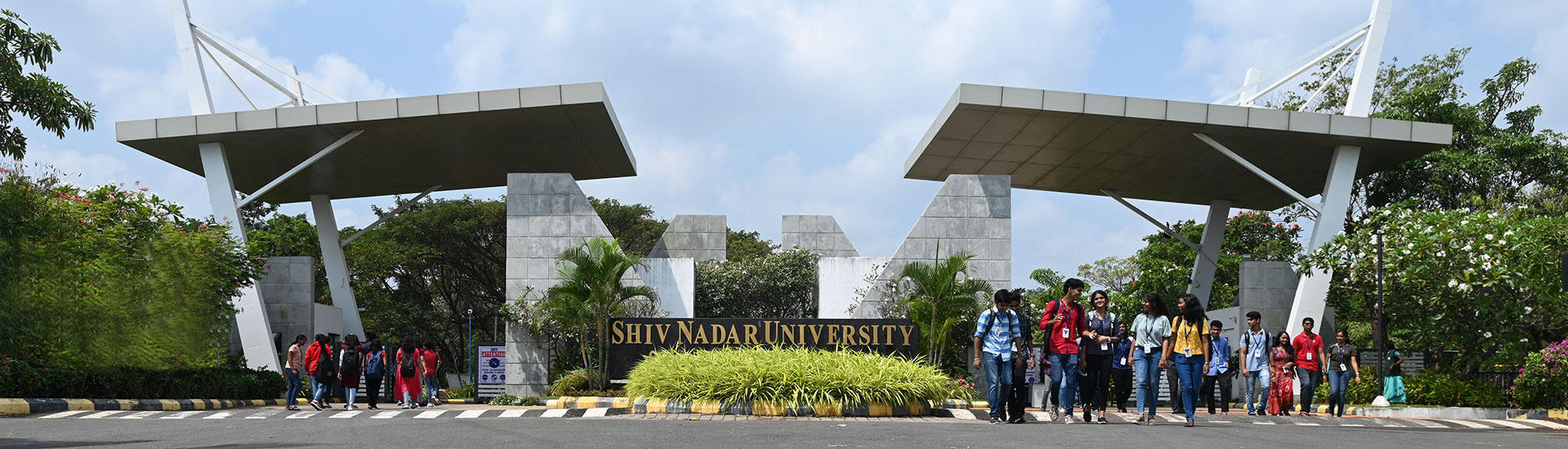
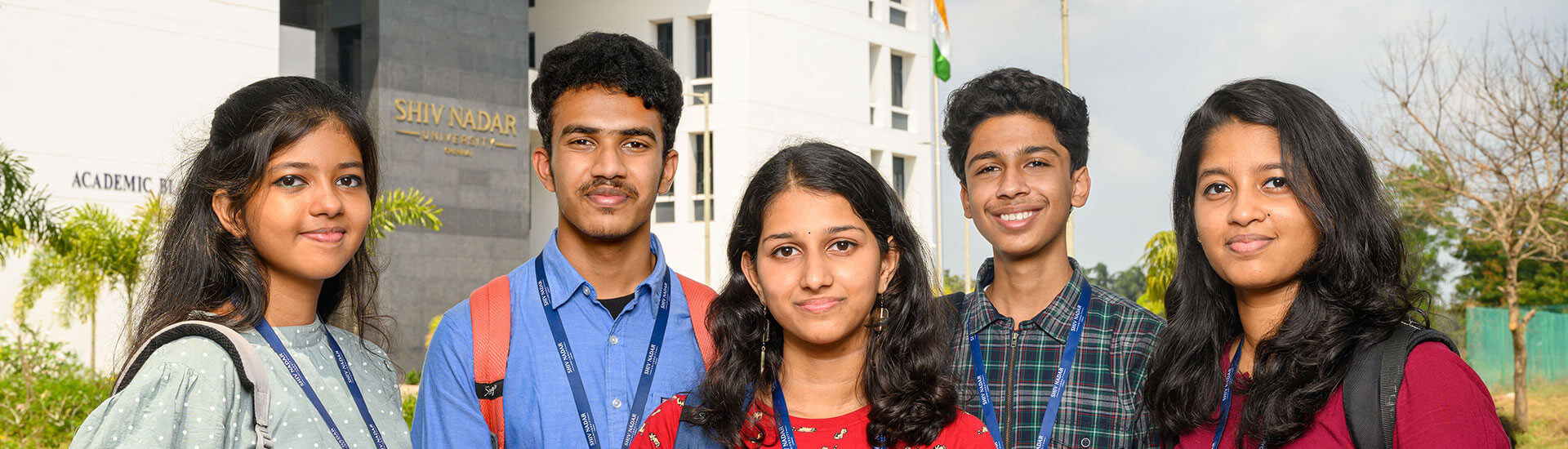
The Shiv Nadar University Chennai is established by an act of the Tamil Nadu Legislative Assembly to promote, conceptualize and bring about a paradigm shift through the development of outstanding leadership, research, knowledge and ideas for education and allied development sectors. Shiv Nadar University Chennai is part of the Shiv Nadar Foundation that has a legacy of excellence of over 29 years in education with over 30,000 alumni & students and an investment of over Rs 6200 cr in building world-class institutions.
Nestled in the city of Chennai, which is known for its intellectual environment, the University is appropriately located to collaborate with industry, academia and Government for co-creation of knowledge and career opportunities. The university with its on-campus research capabilities and the mindset to nurture individuals into problem-solvers of tomorrow is staged to become the epicenter of academic rigor and innovation.
For any enquiries, call on
For readers seeking a thematic understanding of the holy book, is indispensable. Rather than a verse-by-verse commentary, Rahman organizes the Quranic worldview into several major categories: God (Allah) as the merciful Creator. Man as an individual and as part of society. The concepts of Prophethood and Revelation. Social justice and the "Economic Man." Eschatology and the life hereafter.
: Rahman bypasses centuries of traditional commentary, which he often viewed as having obscured the original ethical impulse of the revelation, to offer a direct, philosophical interpretation of the text. Modernity and Education: Islam and Modernity
💡 This book introduces his famous "Double Movement" theory of interpretation:
Having diagnosed the historical ailment, Rahman’s most influential and original work prescribes the cure. This is the methodological phase, articulated most powerfully in and, definitively, in "Islam and Modernity: Transformation of an Intellectual Tradition" (1982) . In these books, Rahman launches a fierce critique of both classical and modern Islamic thought. He rejects the classical usul al-fiqh (principles of jurisprudence) for being overly legalistic and atomistic, while also condemning modern “neo-revivalists” for superficial literalism. His central contribution is the “double movement” theory. First, the scholar must move from the specific, concrete legal rulings of the Qur’an and Sunnah to the general moral principles underlying them (e.g., from the prohibition of interest to the principle of economic justice). Second, the scholar moves from these general principles back down to new specific rulings for the modern context. This process requires a deep, hermeneutical engagement with the text and a profound understanding of the historical and social context of both revelation and the present day. Islam and Modernity is a bleak diagnosis of the crisis of Muslim education—the bifurcation between traditional madrasas and modern universities—and argues that this methodology is the only bridge to a genuine, non-apologetic Islamic modernism.
For the advanced reader, this text—originally published in Karachi—reveals the depth of Rahman’s audacity. He tackles the history of Hadith (the traditions of the Prophet). While Orientalists like Joseph Schacht argued that many Hadith were fabricated legal fictions, and traditionalists argued they were all divinely preserved, Rahman walked a middle path.
Dr. Fazlur Rahman (1919–1988) was a distinguished Pakistani-American scholar and the Harold H. Swift Distinguished Service Professor of Islamic Thought at the University of Chicago . Renowned for his intellectual rigor, his books bridge the gap between classical Islamic learning and modern critical thinking. Core Philosophical Themes Rahman’s work is characterized by a "double movement" hermeneutic: understanding the original intent of the Qur'an within its 7th-century context, then applying those universal principles to contemporary social and moral needs. His writings frequently critique traditional literalism and advocate for the "Islamization of knowledge" to reform Islamic education. Major Works 11 sites ResearchGate https://www.researchgate.net (PDF) Fazlur Rahman, Islamic Philosophy of Education and ... Read full-text. Citations (13) References (20) Abstract. Scholars of Islamic Philosophy of Education widely consider Fazlur Rahman... Wikipedia https://en.wikipedia.org Fazlur Rahman Malik - Wikipedia Fazlur Rahman contributed significantly to the development of a contextual approach to examining the Qur'an, arguing that readers ... The University of Chicago Press https://press.uchicago.edu Fazlur Rahman - The University of Chicago Press Prophecy in Islam. Philosophy and Orthodoxy. Fazlur Rahman. October 2011. Buy this book. Major Themes of the Qur'an. Second Editio... Show all Major Themes of the Qur'an (1980) : Widely considered his most influential work, this book departs from verse-by-verse analysis to present a holistic, thematic study of the Qur'an. It focuses on the text's moral spirit and its relevance to modern life, often serving as a foundational text for academic Islamic studies in the West. Islam (1966) : This comprehensive historical survey tracks the development of Islamic thought, law, and theology. It is frequently used as a standard academic introduction to the faith, emphasizing how the religion evolved through intellectual struggle and adaptation. Islam and Modernity: Transformation of an Intellectual Tradition (1982) : Rahman addresses the intellectual decline of the Muslim world and proposes a methodology for reform. He argues that contemporary education must integrate traditional Islamic values with modern scientific and social methods. Islamic Methodology in History (1965) : This work examines the evolution of
The legacy of Fazlur Rahman’s books is deeply contested. His sharp critiques of traditional scholarship earned him powerful enemies, leading to his forced exile from Pakistan. Conservative scholars accuse him of reducing revelation to a function of history and undermining the divine authority of the text. Yet, his influence on a new generation of reformist thinkers—from Khaled Abou El Fadl to Abdullahi Ahmed An-Na‘im to Tariq Ramadan—is undeniable. His books gave them a language and a rigorous intellectual framework to challenge both literalist Salafism and secularist Westernization. The central message echoing through all of Rahman’s works is one of responsibility. He refuses to let Muslims off the hook: tradition is not an automatic answer, and modernity is not a poison. The only authentic path forward, he insists, is a courageous, critical, and historically informed ijtihad that takes both revelation and reality with absolute seriousness. To read Fazlur Rahman today is to accept that invitation to a difficult, necessary, and unfinished conversation about the future of Islam.

are part of globally reputed organizations
and top ranked universities
The campus life at the university is reflective of our ethos of diversity where you live, play, learn and interact with brilliants minds from within and neighboring communities. As the founding batch, you will get the chance to create new clubs and an array of opportunities for intellectual stimulation such as Smart India Hackathon.
Hostel life is an integral part of the Shiva Nadar University experience. This is why the on-campus housing and living experience is mindfully designed to create a space where you learn in the comfort and safety of separate self-contained facilities for girls and boys, along with dining options.
With emphasis on fostering values such as leadership, teamwork, discipline and keeping overall wellness of the students in mind, the university provides the best-in-class sports facilities. These facilities boast of honing skills of Arjuna awardees R.Ashwin and Anaka Alankamony and many others state and national level players.
If you have an academic mindset, we provide full support. Students have access to cross-campus Wi-Fi, a well-stocked library, and state-of-the-art research and computing resources. They can supplement learning with a variety of interactive online courses.
The University provides the services of a resident campus doctor, along with round- the-clock emergency support, an extensively stocked campus pharmacy, and fitness clubs.
Getting to the city is never a problem. The University supports day scholars staying in the city by providing regular bus services to and from the campus, extending to every corner of Chennai city.
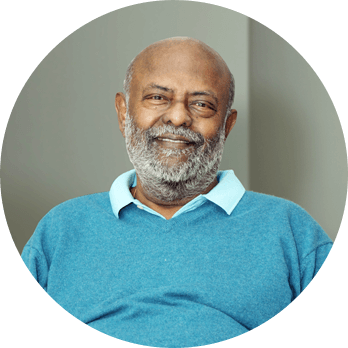
Founder, HCL Group. Founder & Chairman, Shiv Nadar Foundation.
The World Inequality Report, 2018 highlights the rapid pace at which inequality across the world is increasing. This is a particularly acute problem in India, where over 50% of the population is below the age of 25. Education is perhaps the single most important input which can narrow this gap, and the Shiv Nadar Foundation is designed to create enduring institutions which will assist bright young students in achieving their full potential.
The latest of these institutions is being created in Chennai. Chennai has been very dear to my heart, and one of the aspects that I appreciate most is the culture of excellence in education. The high density of brilliant minds makes it a logical home for a global institution. The philosophy of 'simple living, high thinking' establishes an environment where solid academic rigour and boundless curiosity go hand in hand. Shiv Nadar University Chennai will draw strength from and strengthen this culture, and spread it's light across the world.
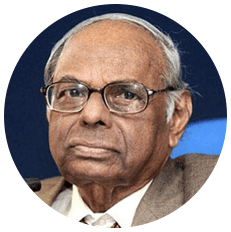
Former Chairman, Reserve Bank of India. Chairman, Madras School of Economics. Former President, Indian Statistical Institute. Chancellor, University of Hyderabad.
Founding figure of Artificial Intelligence. University professor, Computer Science and Robotics, Carnegie Mellon University. Founding Director, Robotics Institute Winner. ACM Turing Award.
For readers seeking a thematic understanding of the holy book, is indispensable. Rather than a verse-by-verse commentary, Rahman organizes the Quranic worldview into several major categories: God (Allah) as the merciful Creator. Man as an individual and as part of society. The concepts of Prophethood and Revelation. Social justice and the "Economic Man." Eschatology and the life hereafter. dr fazlur rahman books
: Rahman bypasses centuries of traditional commentary, which he often viewed as having obscured the original ethical impulse of the revelation, to offer a direct, philosophical interpretation of the text. Modernity and Education: Islam and Modernity
💡 This book introduces his famous "Double Movement" theory of interpretation: For readers seeking a thematic understanding of the
Having diagnosed the historical ailment, Rahman’s most influential and original work prescribes the cure. This is the methodological phase, articulated most powerfully in and, definitively, in "Islam and Modernity: Transformation of an Intellectual Tradition" (1982) . In these books, Rahman launches a fierce critique of both classical and modern Islamic thought. He rejects the classical usul al-fiqh (principles of jurisprudence) for being overly legalistic and atomistic, while also condemning modern “neo-revivalists” for superficial literalism. His central contribution is the “double movement” theory. First, the scholar must move from the specific, concrete legal rulings of the Qur’an and Sunnah to the general moral principles underlying them (e.g., from the prohibition of interest to the principle of economic justice). Second, the scholar moves from these general principles back down to new specific rulings for the modern context. This process requires a deep, hermeneutical engagement with the text and a profound understanding of the historical and social context of both revelation and the present day. Islam and Modernity is a bleak diagnosis of the crisis of Muslim education—the bifurcation between traditional madrasas and modern universities—and argues that this methodology is the only bridge to a genuine, non-apologetic Islamic modernism.
For the advanced reader, this text—originally published in Karachi—reveals the depth of Rahman’s audacity. He tackles the history of Hadith (the traditions of the Prophet). While Orientalists like Joseph Schacht argued that many Hadith were fabricated legal fictions, and traditionalists argued they were all divinely preserved, Rahman walked a middle path. The concepts of Prophethood and Revelation
Dr. Fazlur Rahman (1919–1988) was a distinguished Pakistani-American scholar and the Harold H. Swift Distinguished Service Professor of Islamic Thought at the University of Chicago . Renowned for his intellectual rigor, his books bridge the gap between classical Islamic learning and modern critical thinking. Core Philosophical Themes Rahman’s work is characterized by a "double movement" hermeneutic: understanding the original intent of the Qur'an within its 7th-century context, then applying those universal principles to contemporary social and moral needs. His writings frequently critique traditional literalism and advocate for the "Islamization of knowledge" to reform Islamic education. Major Works 11 sites ResearchGate https://www.researchgate.net (PDF) Fazlur Rahman, Islamic Philosophy of Education and ... Read full-text. Citations (13) References (20) Abstract. Scholars of Islamic Philosophy of Education widely consider Fazlur Rahman... Wikipedia https://en.wikipedia.org Fazlur Rahman Malik - Wikipedia Fazlur Rahman contributed significantly to the development of a contextual approach to examining the Qur'an, arguing that readers ... The University of Chicago Press https://press.uchicago.edu Fazlur Rahman - The University of Chicago Press Prophecy in Islam. Philosophy and Orthodoxy. Fazlur Rahman. October 2011. Buy this book. Major Themes of the Qur'an. Second Editio... Show all Major Themes of the Qur'an (1980) : Widely considered his most influential work, this book departs from verse-by-verse analysis to present a holistic, thematic study of the Qur'an. It focuses on the text's moral spirit and its relevance to modern life, often serving as a foundational text for academic Islamic studies in the West. Islam (1966) : This comprehensive historical survey tracks the development of Islamic thought, law, and theology. It is frequently used as a standard academic introduction to the faith, emphasizing how the religion evolved through intellectual struggle and adaptation. Islam and Modernity: Transformation of an Intellectual Tradition (1982) : Rahman addresses the intellectual decline of the Muslim world and proposes a methodology for reform. He argues that contemporary education must integrate traditional Islamic values with modern scientific and social methods. Islamic Methodology in History (1965) : This work examines the evolution of
The legacy of Fazlur Rahman’s books is deeply contested. His sharp critiques of traditional scholarship earned him powerful enemies, leading to his forced exile from Pakistan. Conservative scholars accuse him of reducing revelation to a function of history and undermining the divine authority of the text. Yet, his influence on a new generation of reformist thinkers—from Khaled Abou El Fadl to Abdullahi Ahmed An-Na‘im to Tariq Ramadan—is undeniable. His books gave them a language and a rigorous intellectual framework to challenge both literalist Salafism and secularist Westernization. The central message echoing through all of Rahman’s works is one of responsibility. He refuses to let Muslims off the hook: tradition is not an automatic answer, and modernity is not a poison. The only authentic path forward, he insists, is a courageous, critical, and historically informed ijtihad that takes both revelation and reality with absolute seriousness. To read Fazlur Rahman today is to accept that invitation to a difficult, necessary, and unfinished conversation about the future of Islam.